
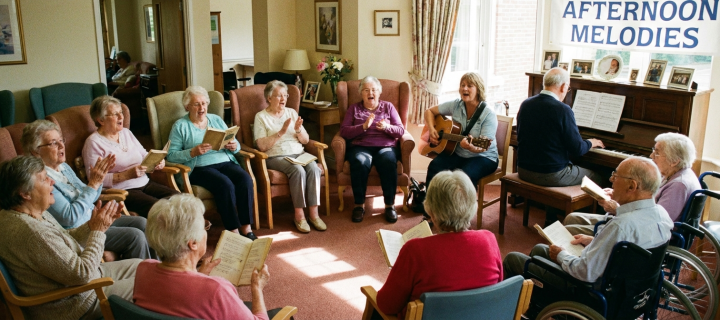
Singing together can turn an ordinary afternoon in an aged care home into something quietly extraordinary. One moment the room is calm and a bit sleepy, the next someone starts tapping the arm of their chair, another person joins in on the chorus, and suddenly you have eye contact, smiles, and that unmistakable feeling of “we’re in this together”. It is simple, familiar, and surprisingly powerful.
Why singing reaches people when conversation can be hard
Singing uses parts of the brain that often stay resilient, even when memory or language are changing. That is why an older person who struggles to find words in conversation can still sing along to a song they loved in their teens or twenties. Familiar music can cue long-held memories, lift mood, and help people feel like themselves again, even if just for a few minutes.
In aged care homes, this matters because connection is everything. Singing gives residents a way to participate without pressure. You do not need to be “good” at music. You just need to show up, breathe, and join in when you feel ready.
The social magic of singing in a group
There is a reason choirs have existed forever. Group singing creates a shared rhythm. People start and stop together. They laugh at the same forgotten lyric. They look around to see who knows the next line. That shared experience is belonging in real time.
For older persons who feel new to the home or unsure in social settings, singing can be an easier doorway than a sit-down chat. It gives everyone something to do with their hands, their voice, their attention. Awkward silences disappear because the song carries the moment.
Why it can calm anxiety and lift mood
Singing changes breathing. Long phrases naturally encourage slower, deeper breaths, which can help the body settle. Familiar songs also bring predictability, and predictability can feel safe, especially for residents living with dementia or anyone feeling overwhelmed by change.
You will often see it in the body language: shoulders drop, faces soften, people stay in the room longer. The tone of the whole space can shift.
Memory, identity, and the “old you” showing up
Music is tied to identity. The songs we loved are often linked to first cars, dances, weddings, footy seasons, road trips, kids growing up, Sunday chores, church, parties, heartbreak, and hope. When an aged care home chooses the right songs, it is not just entertainment. It is a way of saying, “Your life matters. Your story is still here.”
A practical example: if a resident grew up on the radio hits of the 1950s and 1960s, a weekly sing-along built around those decades will usually land better than a generic playlist. Personal beats popular.
Why singing supports people living with dementia
For many residents living with dementia, singing can be a reliable way to connect when other ways are harder. A chorus can prompt speech. A rhythm can prompt movement. A well-known tune can reduce agitation and invite gentle participation without demanding “memory” in the usual sense.
This is why many aged care homes include music-based sessions as part of lifestyle and wellbeing programs, alongside other creative activities like art and movement.
How aged care homes can make sing-alongs work better
A great group sing is not about volume. It is about design.
-
Choose songs residents already know (and rotate by era and culture)
-
Keep the pace comfortable and the lyrics visible in large print
-
Offer simple percussion (shakers, tambourines) for people who do not want to sing
-
Keep sessions shorter and more frequent rather than long and tiring
-
Watch the room and adjust, one familiar song can be worth five unfamiliar ones
How CCH brings music to life
At CCH, moments like these matter. Singing together is one of those simple, human experiences that can build connection quickly, support wellbeing, and help older persons feel part of a community. Whether it is a planned sing-along, live music, or spontaneous singing in a lounge, the goal is the same: create warmth, participation, and joy that feels natural, not forced.
If you are exploring residential aged care for yourself or a loved one, you can learn more about CCH and our residences on our website.