Music has an almost magical ability to reach places that words can’t. A melody from decades ago can bring a smile to someone who hasn’t spoken in weeks. A familiar chorus can transport a person living with dementia back to a wedding, a first dance, or a childhood kitchen filled with laughter. In aged care homes across Australia, music and arts therapies are transforming lives, unlocking memories and creating moments of pure joy where connection seemed impossible.
At CCH, music therapy, concerts, sing-alongs and creative arts programs are woven into daily life, not as entertainment alone but as powerful tools for healing, connection and wellbeing.
Why Music Matters in Aged Care
The human brain stores music differently from other memories. Even when dementia damages the parts of the brain responsible for language and recent memory, the neural pathways linked to music often remain intact. That’s why someone who struggles to remember their own address might sing every word of a song they loved fifty years ago.
Research from the US National Institute on Aging found that listening to personally meaningful music strengthens the brain’s memory networks and helps with emotional regulation. Closer to home, studies from Western Sydney University’s MARCS Institute showed that music therapy reduces anxiety, improves mood and eases behavioural symptoms often associated with dementia.
Music also reduces social isolation, encourages communication and boosts self-confidence. For residents in palliative care, it provides comfort and helps manage pain. Music doesn’t just fill silence. It fills hearts.
The Science Behind Music Therapy
Music therapy isn’t just playing background tunes or hosting a sing-along (though both have their place). It’s a clinical, evidence-based intervention delivered by trained music therapists who use music strategically to address specific physical, emotional, cognitive and social needs.
When someone hears a familiar song, multiple areas of the brain light up at once. The rhythm activates the motor cortex, the melody engages the auditory and emotional centres, and the lyrics tap into language and memory networks. This multi-sensory stimulation promotes neuroplasticity, the brain’s ability to form new connections even in older age.
Music therapy can:
-
Reduce agitation, anxiety and depression
-
Improve communication and conversation skills
-
Enhance memory recall and reminiscence
-
Support motor function and coordination through rhythm-based movement
-
Provide emotional outlets and boost self-expression
-
Foster social connection and reduce loneliness
How CCH Uses Music and Arts Therapies
At CCH, music isn’t background noise. It’s a daily part of life, woven into care plans and celebrated in communal spaces.
Music Therapy Sessions
Trained therapists visit homes regularly, delivering one-on-one and group music therapy sessions tailored to each resident’s preferences and needs. Some sessions focus on relaxation, others on stimulating memory or encouraging physical movement through rhythm.
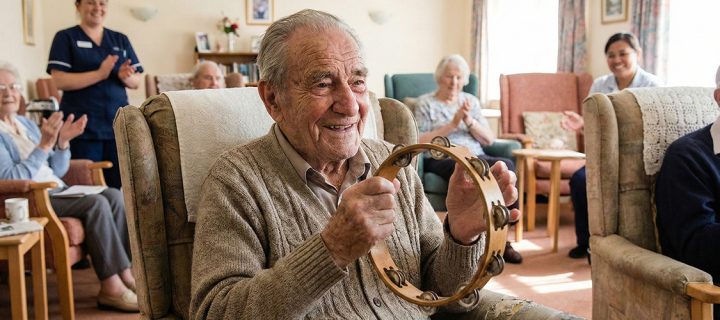
Residents living with dementia particularly benefit. Music therapists choose songs from each person’s past, songs tied to significant life moments, cultural heritage or simply personal favourites. The effect can be profound. A resident who has been withdrawn all morning might suddenly light up, tapping their foot or singing along, reconnected to themselves and those around them.
Concerts and Sing-Alongs
Live music fills CCH homes regularly. Local musicians, school choirs and community groups visit to perform, creating joyful, intergenerational moments where residents clap, hum and sometimes get up to dance. Sing-alongs invite everyone to join in, creating a sense of belonging and shared celebration.
One aged care home in Australia introduced an intergenerational “Sing Out Loud” program where primary school children visit residents to sing together. The laughter, connection and pure delight on both sides speak volumes about music’s power to unite.
Arts and Craft Therapy
Beyond music, CCH offers creative arts programs including painting, drawing, sculpture and craft activities. Like music therapy, art therapy is delivered by trained therapists who use creative expression to support emotional wellbeing, improve fine motor skills and stimulate cognitive function.
Art therapy is particularly valuable for residents with dementia, helping them process emotions, improve communication and engage with the world in ways that feel safe and meaningful. Even for those with limited mobility, art offers a way to create, express and feel a sense of accomplishment.
Movement to Music
Exercise programs at CCH often incorporate music. Zumba, tai chi, movement to music sessions and dance all use rhythm and melody to motivate, energise and bring joy to physical activity. Music makes exercise feel less like work and more like celebration, encouraging even reluctant participants to join in.
Real Stories, Real Impact
At one aged care home in Australia, staff noticed residents became significantly calmer and more relaxed after introducing music therapy sessions. One hospitality manager shared, “I have definitely noticed the residents are more relaxed. The dementia patients have become a lot calmer and everyone really enjoys the sessions”.
Another study in rural Australian aged care homes found that person-centred, culturally appropriate music sessions reduced agitation by over 87%, with most residents presenting as relaxed, attentive and smiling during and after sessions. Staff reported behavioural changes, meaningful interaction, increased participation and visible contentment.
For many residents, music unlocks memories long thought lost. One moment they’re quiet and distant, the next they’re singing every word to a song from their youth, eyes bright with recognition and joy.
The Broader Benefits of Arts Therapies
Arts therapies complement traditional healthcare, offering holistic support that addresses not just physical needs but emotional, social and spiritual wellbeing too.
Benefits include:
-
Positive emotional responses and improved mood
-
Reduced stress and anxiety for residents and carers alike
-
Improved social participation and connection
-
Enhanced verbal fluency and communication
-
Better fine motor skills, coordination, strength and balance
-
Increased attention span and cognitive engagement
-
Elevated quality of life and sense of purpose
Why CCH Prioritises Creative Therapies
At CCH, the belief is simple: older persons deserve lives filled with joy, connection and meaning. Music therapy, arts programs, concerts and creative activities aren’t add-ons or extras. They’re essential ingredients in a care model that values the whole person.
By offering regular access to music and arts therapies, CCH gives residents the chance to reconnect with their past, express themselves in the present and find moments of pure happiness every single day. Whether it’s a quiet art session in the lounge, a lively sing-along in the activities room or a one-on-one music therapy visit, every moment is an opportunity for healing, memory and joy.
Music and memory are inseparable. At CCH, we honour that connection, using the transformative power of music and the arts to help residents feel seen, heard and truly alive.